
PROJECTS
Key Works including research projects, satellite missions and scientific software projects
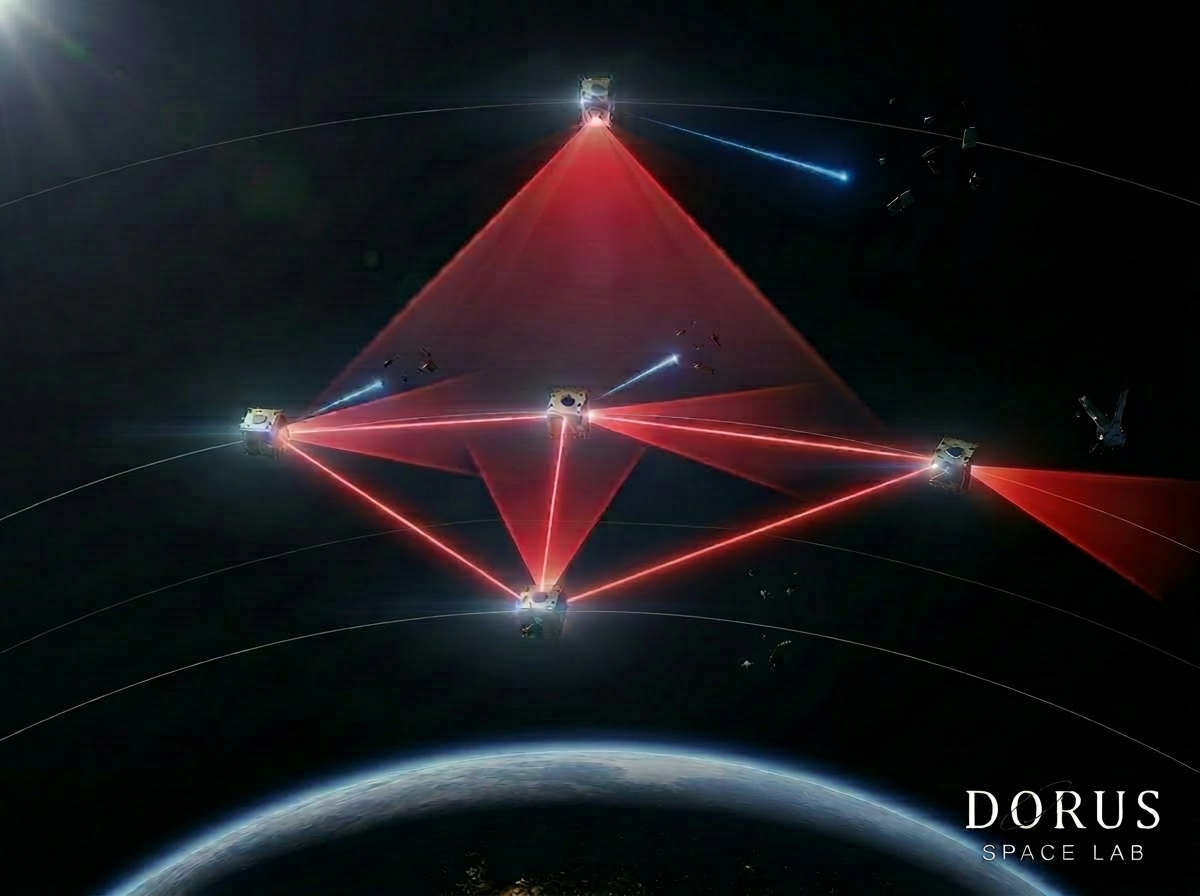
ARISTAR mission concept visualisation (Credit: DORUS Space Lab)
ARISTAR mission
ARISTAR is an advanced mission concept dedicated to high-precision space-based monitoring of orbital debris. ARISTAR mission concept, authored by Thomas and being developed by DORUS Space Lab, addresses space‑based observation challenges through an optimised constellation design and in‑orbit demonstration of quantum sensing technologies.
Supported by the GEORB software suite, ARISTAR utilises state-of-the-art Precise Orbit Determination (POD) and high-fidelity dynamics modelling to achieve unprecedented accuracy for space debris orbits.
Furthermore, ARISTAR is also envisioned to host the ARIS mission concept, an ambitious research initiative focused on measuring higher-order derivatives of the gravitational potential.

SING “Studying the Impact of the Next Gravity missions”
“SING: Studying the Impact of the NGGM and MAGIC Gravity missions” is a study project funded by the European Space Agency (ESA), during the period 9/2024 – 6/2026, in the frame of the AO/1-12156/24/NL/SC call “NGGM and MAGIC Science and Applications Impact Study“.
SING project studies the impact of the Mass Change and Geophysics International Constellation (MAGIC) mission – a future joint mission by NASA and ESA – and the ESA’s Next Generation Gravity Mission (NGGM). Further details will be available through the official project website www.esa-sing.org.
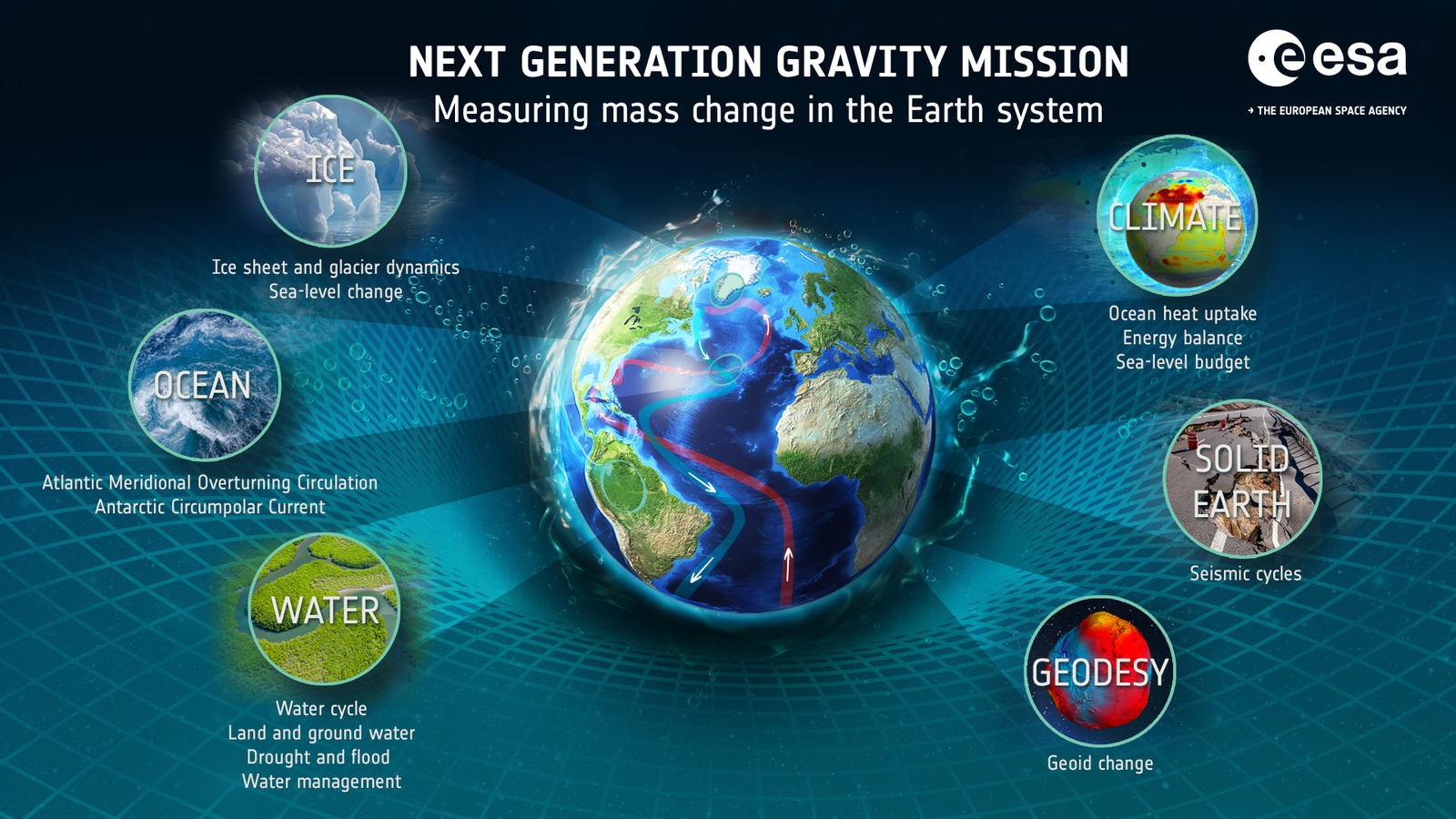
NGGM mission concept (Credit: ESA)

GRACE Follow-On mission (Credit: NASA)
GRACE-FO Mission data analysis
“Data analysis capability for GRACE-FO mission’ scientific data products of precise orbits, in-orbit calibrated accelerometer data and gravity field models” research project led by Thomas Papanikolaou at Aalborg University Copenhagen during 2022-2023. The GRACE-FO data products are being delivered by GEORB.
Gravity Recovery and Climate Experiment (GRACE) missions are joint missions of NASA and the German Aerospace Center (DLR) with the goal of measuring precise changes of the Earth’s gravitational field and climate change modelling through monitoring of water storage, ice sheets, glaciers, sea level and solid Earth.


GINAN (Credit: Geoscience Australia)
GINAN
GINAN, “GNSS Analysis Centre Software (ACS)”, is an open source Global Navigation Satellite Systems (GNSS) software toolkit and service developed at Geoscience Australia in collaboration with FrontierSI and partner Universities, funded by the Australian Government.
Dr. Thomas Loudis Papanikolaou led the research and development of GINAN’s GNSS Precise Orbit Determination capability during 2015 to 2020.

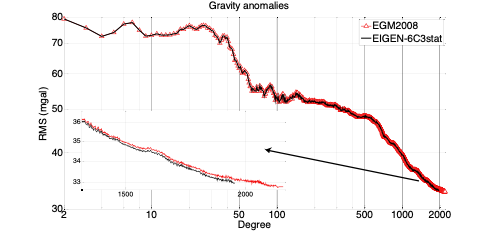
GravSynth
GravSynth is an open-source software for gravity field functionals and Earth tides effects considering solid Earth tides and Ocean tides. It applies spherical harmonic synthesis of gravity models for computing gravity anomalies and geoid heights. GRAVsynth was created by Thomas in 2013 and released as open source in 2022.
The study project was supported by the Hellenic Military Geographical Service (HMGS) for applications in data analysis of terrestrial gravity, heights and tides gauges stations of the HMGS network (Papanikolaou and Papadopoulos 2015, doi: 10.1515/jogs-2015-0008).
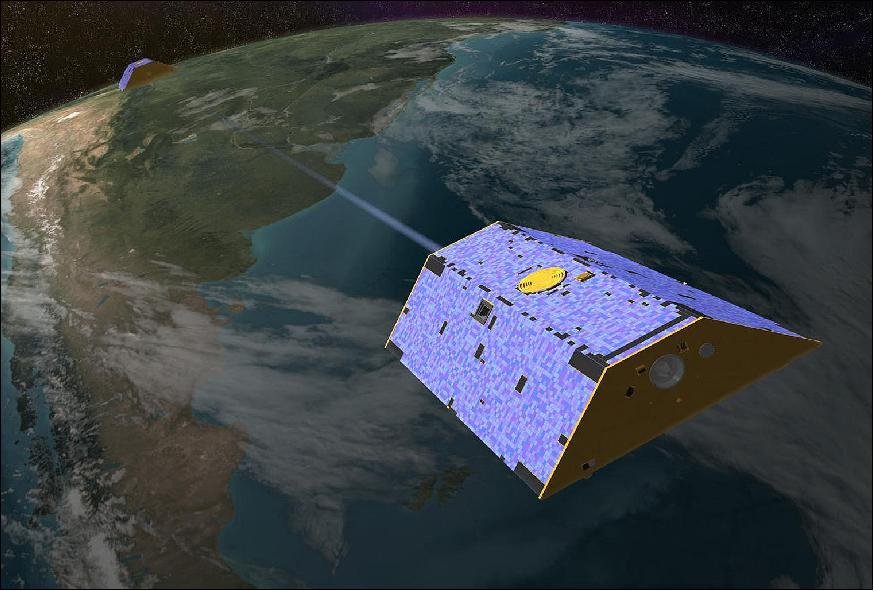
GRACE mission (Credit: NASA)
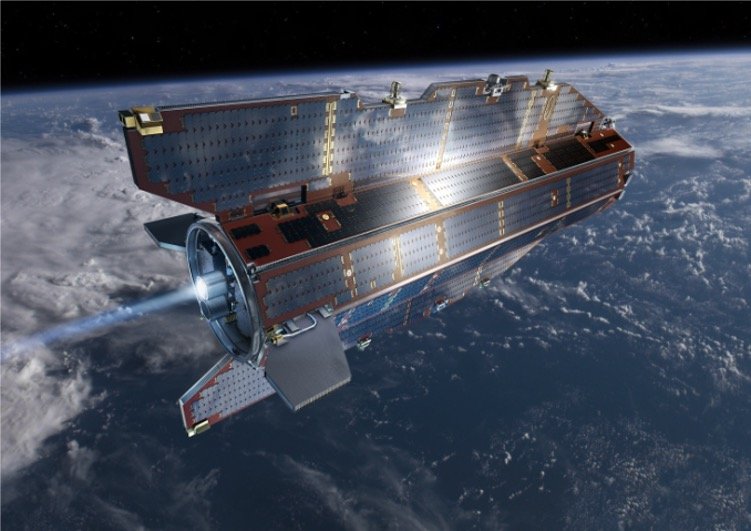
GOCE mission (Credit: ESA)
GRACE and GOCE missions
orbit analysis
Thomas’ research on dynamic orbit analysis of Gravity Recovery And Climate Experiment (GRACE) and Gravity Field and Steady-State Ocean Circulation (GOCE) missions, was supported by research grants including the post-doctoral research’ excellence scholarship by the Aristotle University’ Research Committee during 2013-2014.
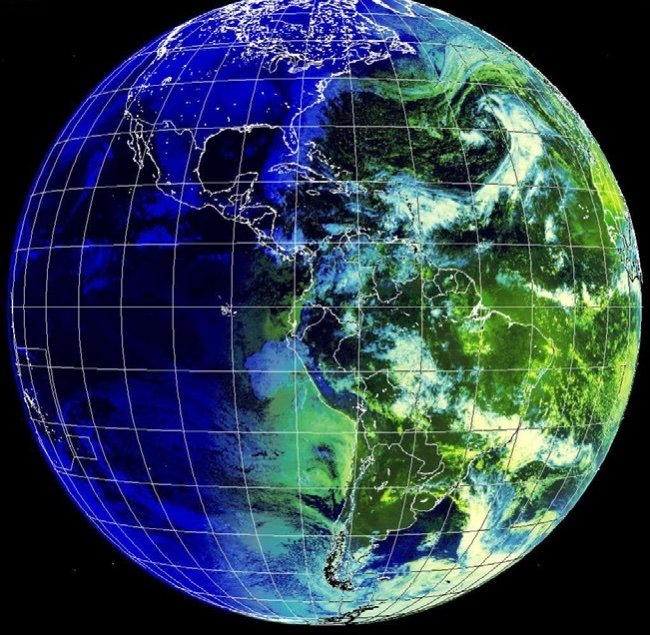
Image: ESA study report’ cover (Tsoulis et al. 2011)
Gravity Models analysis
“Spectral Analysis and interpretation of current satellite-only Earth gravity models by incorporating global terrain and crustal data” project funded by the European Space Agency (ESA), ESTEC Contract 22319/09/NL/CB.
Following the launch of ESA’s Gravity Field and Steady-State Ocean Circulation (GOCE) mission, this ESA/ESTEC project was carried out at the Aristotle University of Thessaloniki (2009-2011).